GreenVET pathway

Online GreenVET Path
| ← close |
 |  |  | ||
Reducing Overproduction in Schools: Emphasizing On-Demand Production
European TVET institutions are increasingly adopting production-on-demand practices—from garment making and digital tailoring to workforce planning. These approaches ensure that both products and student skills are created to meet real demand, reducing waste and enhancing relevance.Key People and Partners Involved
- School management and teaching staff
- Students
- Local community members
Description of the practice
In many Vocational Education and Training (VET) settings, learners often engage with "foleys"—hypothetical projects, simulated clients, or repetitive mock assignments. While these exercises are useful in the early stages of training to help students develop foundational skills, they can eventually distance learners from the real-world challenges they will face in the workplace. These fabricated tasks, though well-intentioned, may fail to capture the dynamic, customer-focused demands of the job market, leaving students unprepared for the practical complexities they will encounter in their careers.The shift towards customer-oriented, production-on-demand models in VET aligns with global best practices in greening VET, work-based learning, and community-responsive education. This approach emphasizes producing goods and services in direct response to actual needs, whether from local businesses, community organizations, or even within the school itself. It moves away from unnecessary overproduction and fosters a more sustainable, practical learning experience that closely mirrors the realities of today’s industries. This shift reflects the principles outlined in frameworks such as UNESCO-UNEVOC’s Greening VET strategy, the European Commission’s Pact for Skills, and Cedefop’s VET for Sustainable Growth, all of which advocate for more relevant, industry-connected training.
National reforms, such as Finland’s competence-based VET model, further highlight the value of integrating real-world, demand-driven learning experiences into vocational education. This model emphasizes learner agency, aligning educational outcomes with labor market needs, and embedding sustainable development as a core transversal competence. By focusing on production based on actual demand, students develop not only technical skills but also critical competencies in problem-solving, adaptability, and sustainability. Such an approach ensures that VET programs remain responsive to both the evolving needs of the workforce and the global sustainability agenda, preparing students for the challenges of tomorrow’s job market.
Where it’s being implemented
This link might not lead to content in English language. Use your browser's translate function or automatic captions to explore this resource.- Finnish VET provider Omnia shows what production on-demand can look like. Check out their service website: "Omnia’s future and current professionals are at your service – we carry out customer projects and offer our specialized services with skill and passion."
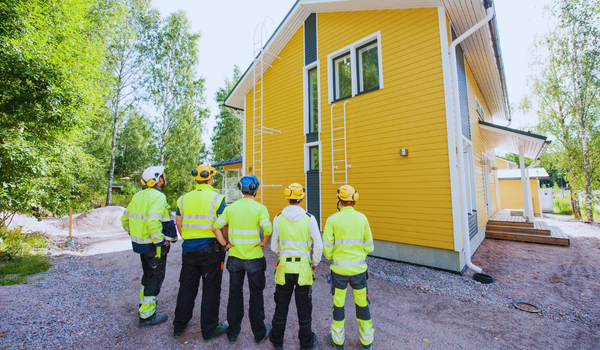
https://www.omnia.fi/haku/palvelut - Omnia's students build at Omnia"s own building sites.
Future builders, electricians, gardeners, carpenters and artisans become qualified professionals in a genuine learning environment. All work is monitored by professionals.
https://www.omnia.fi/en/development-and-cooperation/hi-were-building
Impact and Results
- Students work on real outputs that affect real people.
- Students understand workflows, logistics, customer service, and sustainability constraints.
- Students are embedded in contexts where material use, energy, time, and labor matter.
- Students begin to value need-based production, not stockpiling practice.
- Students see their work contribute directly to society, fostering civic pride and social capital.
Implementation Tips and Insights
- Move from simulated to real-world production by encouraging students to work on actual projects that respond to genuine needs.
- Involve real clients in the learning process, allowing students to gain hands-on experience with actual demands and expectations.
- Equip teachers to facilitate real-world learning, providing them with the tools and strategies to bridge the gap between classroom theory and workplace practice.
- Incorporate customer feedback into assessments, using it as a valuable tool to measure student performance and enhance their learning outcomes.
- Make sustainability a practical, hands-on skill, ensuring that students not only learn about sustainable practices but also apply them directly in their projects.


- © 2023 GreenVET | handcrafted & powered with love by GreenVET Team