GreenVET pathway

Online GreenVET Path
| ← close |
 |  |  |  | |
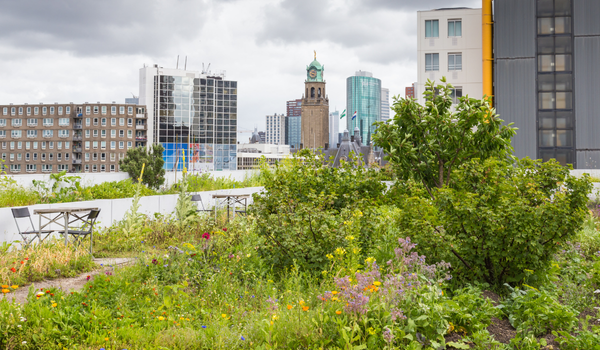
Transforming Rooftops into Educational Herb Gardens
IEK SVIE in Athens turned an unused rooftop into a herb flower bed, creating a hands-on learning space that supports culinary classes, reduces costs, enhances building insulation, and models sustainability.Key People and Partners Involved
- School Administration
- Teachers & Educational Staff
- Culinary Students
- Local Community or suppliers
Description of the practice
"IEK SVIE in Athens faced the challenge of how to transform an underused rooftop into a multifunctional space that could both benefit the environment and enrich the school’s educational programs. Recognizing the potential above their heads, the school’s leadership set out to turn this idle area into a vibrant green spot. Implementing rooftop gardens in educational settings begins with a collaborative effort between school leadership, facilities teams, and sustainability-minded educators. The process typically involves assessing the building’s structural capacity, securing funding (often through green innovation grants or Erasmus+ projects), and involving students in the design and planning stages"They began by installing a simple herb flower bed, an initiative that brought together administrators, teachers, and particularly culinary students, who would later use the fresh herbs and plants in their cooking classes. This not only provided an opportunity for experiential learning but also reduced ingredient costs, embedding sustainability directly into the curriculum.
Beyond these immediate gains, the rooftop garden is expected to improve the building’s insulation over time, lowering heating and cooling needs and thus reducing the school’s environmental footprint. Rooftop gardens have a tangible impact on the school’s sustainability footprint. They improve building insulation, helping to regulate indoor temperatures and reduce energy consumption related to heating and cooling. Additionally, they support local biodiversity by creating microhabitats for pollinators and birds, and they help manage stormwater runoff, reducing strain on urban drainage systems. This practical, replicable model shows how educational institutions can utilize overlooked spaces to support hands-on learning, foster community collaboration, and contribute to broader climate goals.
Where it’s being implemented
This link might not lead to content in English language. Use your browser's translate function or automatic captions to explore this resource.- Under its EUTeens4Green initiative, the Technical University of Crete installed a living lab green roof atop its School of Chemical and Environmental Engineering. This green infrastructure enhances insulation, promotes biodiversity, manages stormwater, and serves as a research platform for climate and energy data collection.
https://greenroof-tuc.gr/en/the-greenroof-at-the-technical-university-of-crete/ - In 2016, the Royal Conservatoire of Scotland introduced a rooftop garden that produces organic vegetables for its own catering services. It uses on-site composting and supports SDG"12 by reducing food miles, promoting responsible consumption, and embedding sustainability into campus life
https://www.sustainabilityexchange.ac.uk/rooftop_food_grow ing_rcs"utm_source=chatgpt.com
Impact and Results
- Lower ingredient costs for culinary programs
- Enhanced hands-on learning experiences for students
- Improved building insulation, reducing energy needs
- Raised environmental awareness among students and staff
- Strengthened ties between administration, educators, and students
Implementation Tips and Insights
- Start small, begin with simple raised beds or pots.
- Engage students and staff early to build ownership.
- Choose low-maintenance herbs and native plants.
- Plan for safe, stable rooftop access and load-bearing capacity.
- Celebrate milestones (first harvest, energy savings) to keep momentum.
Useful Links and Resources
This link might not lead to content in English language. Use your browser's translate function or automatic captions to explore this resource. Explains how local initiatives like green rooftops contribute to sustainable urban development.https://sdgs.un.org/goals/goal11
Describes how green roofs can improve building insulation, reduce energy use, and lower costs.
https://www.energy.gov/fecm/articles/improving-our-environment-one-roof-time
This article explains 4 significant issues to take into consideration before start building a rooftop garden.
https://blog.landscapeprofessionals.org/four-essential-considerations-for-creating-a-rooftop-garden/
This is a detailed guide on how to build a rooftop garden.
https://www.fiori.com.au/blogs/home-improvement-and-renovation/rooftop-garden-benefits-tips"srsltid=AfmBOooHpBac_K2lBWaAvoKv15IE466dZ5YehkX-VGWpSvlrXjQwlgjq


- © 2023 GreenVET | handcrafted & powered with love by GreenVET Team