GreenVET pathway

Online GreenVET Path
| ← close |
 |  |  | ||
Open Doors: Hosting Networking Events at your School
Open your doors to local sustainability initiatives by offering your school as a venue for meetings or events. It’s an easy way to bring valuable expertise directly into your school community.Key People and Partners Involved
- School management
- janitors
- local NGOs or initiatives
Description of the practice
Building connections with sustainability initiatives and external experts can significantly enhance school life and learning"but networking often requires time and energy that many schools simply don"t have. A practical and effective alternative is to shift the focus inward: instead of sending staff out to network, bring the expertise directly into the school. Hosting events on-site creates an opportunity to engage with relevant topics without adding extra travel or coordination demands.What many schools do have, especially in the afternoons or evenings, is available space. Classrooms, assembly halls, and outdoor areas can easily be transformed into vibrant meeting points for dialogue and collaboration. By offering these spaces to external initiatives, schools become more than just places of learning"they become community hubs where partnerships can grow organically around shared sustainability goals.
This win-win setup benefits both sides. Initiatives gain a venue and audience, schools gain direct access to knowledge and local networks. Over time, these hosted events can lead to new collaborations, inspire curriculum ideas, and even contribute to long-term transformation in how sustainability is embedded in school culture and operations. All it takes is opening your doors.
Where it’s being implemented
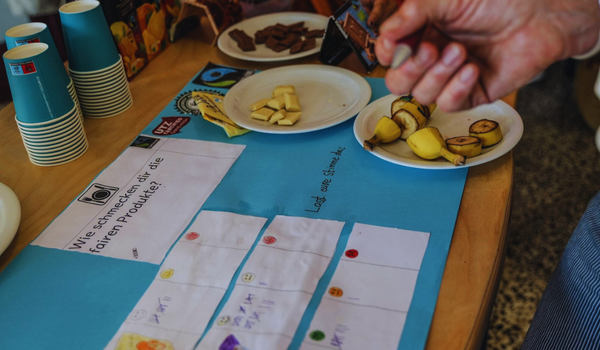
This link might not lead to content in English language. Use your browser's translate function or automatic captions to explore this resource.- A great example of this approach is the Max-Eyth vocational school, which hosted a fair trade-themed event in collaboration with the city’s Fair Trade initiative. The event featured a range of interactive activities and discussions highlighting the benefits of fair trade and exploring how it can be integrated into school operations and curricula. By welcoming the initiative onto school grounds, the event sparked new ideas, forged partnerships, and encouraged both staff and students to think critically about global responsibility—right in their own community.
https://www.mes-schiffdorf.de/2023/08/12/fairtrade-kommt-an-populaere-themen-ueberzeugen-jung-und-alt/ - The idea of transforming a school into a community hub was brought to life through architecture in the Danish town of Ikast-Brande. When the local school required additional space, the new building—"Hjertet" (Danish for "The Heart")—was intentionally designed to host a wide range of initiatives. This not only ensured optimal use of the facilities but also strengthened connections between the school and the wider community.
https://educationsnapshots.com/projects/7417/the-heart-in-ikast/
Impact and Results
- Increased community engagement by fostering connections between the school and local sustainability stakeholders.
- Broadened learning opportunities by integrating informal and non-formal educational experiences.
- Greater visibility for local initiatives by offering them a public platform within the school setting.
- The school becomes a catalyst for local action by promoting sustainability both through community partnerships and responsible use of ist physical resources.
Implementation Tips and Insights
- Map Local Sustainability Actors - Identify local NGOs, eco-social enterprises, farmers, repair cafés, and climate action groups who could benefit from access to your space.
- Offer Off-Hours Access - Make your facilities - such as meeting rooms, auditoriums, or school gardens - available during evenings, weekends, or holidays to maximize existing infrastructure use.
- Set Clear Guidelines for Use - Create a simple framework for how the space can be used, including safety, accessibility, environmental impact, and educational value.
Useful Links and Resources
This link might not lead to content in English language. Use your browser's translate function or automatic captions to explore this resource. The community school concept is based on the idea of putting the school in the center of the local community. As such schools are more than just a place for academic learning - it serves as a hub for community life, offering services, activities, and support in collaboration with local organizations, families, and residents.https://www.youtube.com/watch"v=ysmDdwwmOII


- © 2023 GreenVET | handcrafted & powered with love by GreenVET Team