GreenVET pathway

Online GreenVET Path
| ← close |
 |  |  | ||
Walk-Through with Local Authorities to Promote Climate-Resilient School Environments
Schools often have limited influence over their campus infrastructure, which is usually managed by the municipality, yet it significantly affects the learning environment—especially during heatwaves when sealed surfaces and concrete intensify the urban heat island effect. A walk-through with local authorities on a hot summer day can help raise awareness and encourage more climate-resilient planning.Key People and Partners Involved
- school management
- municipality
- school authority
- students
Description of the practice
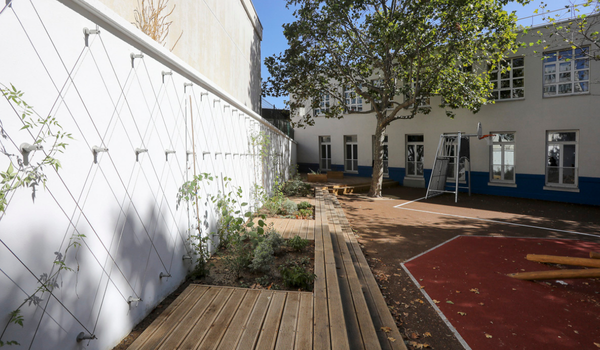
School buildings and outdoor areas often fall under municipal responsibility, which can limit the school’s direct influence over the design and management of its physical environment. However, the built environment plays a key role in shaping the quality of the learning experience and the well-being of students and staff. This is particularly evident in the context of climate change: sealed surfaces, lack of vegetation, and concrete-heavy structures contribute to overheating and reduced comfort—especially during heatwaves.A highly effective and low-cost advocacy method is to organize a campus walk-through with local authorities on a hot summer day. This direct experience allows decision-makers to feel the temperature difference in shaded versus unshaded areas, to observe where rainwater collects due to poor drainage, or to notice where outdoor learning is impossible due to a lack of trees or seating. Even without major investments, small interventions can significantly increase climate resilience and improve the learning environment. Examples include: - Installing shade sails or using temporary shading structures in schoolyards. - Replanting green strips or adding raised garden beds to break up sealed surfaces. - Creating “green pockets” or outdoor classrooms using low-cost seating like tree trunks or benches. - Implementing water retention areas with gravel or permeable surfaces to reduce flooding and cool the area naturally.
The walk-through can serve as a starting point for joint planning between the school and the municipality, highlighting areas where even small-scale changes can have a big impact on sustainability, comfort, and the overall educational atmosphere.
Where it’s being implemented
This link might not lead to content in English language. Use your browser's translate function or automatic captions to explore this resource.Impact and Results
- Increased awareness among decision-makers: Local authorities gain a first-hand understanding of climate-related challenges on school grounds, such as overheating, lack of shade, or poor drainage.
- Stronger collaboration between schools and municipalities: The walk-through fosters dialogue and can lead to more responsive planning, shared responsibility and joint initiatives to improve campus environment.
- Low-cost improvements implemented: Small, practical interventions - like adding shade, greenery, or seating - are more likely to be approved and relized after stakeholders experience the issues in person.
- Enhanced climate resilience of the school campus:
- Improved quality of the learning environment:
Implementation Tips and Insights
- Choose a hot day for maximum impact:
- Connect this initiative directly to your teaching. The Urban Heat Island effect is a climate-related issue that students can observe and experience in their immediate surroundings. Explore practical ideas and activities in the resource section.
- Invite a diverse group of stakeholders:
- Use simple tools to visualize impact:
- Suggest low-cost, high-impact improvements:
Useful Links and Resources
This link might not lead to content in English language. Use your browser's translate function or automatic captions to explore this resource. Lesson materials on Urban Heat Islands that engage students in developing practical ideas to reduce this effect in their own surroundings.https://www.oce.global/en/resources/class-activities/urban-heat-islands-0
The EU-funded OASIS project in Paris shows how schools an be pioneering sustainable urban development and climate resilience. Check out the project website:
https://www.paris.fr/pages/les-cours-oasis-7389


- © 2023 GreenVET | handcrafted & powered with love by GreenVET Team