GreenVET pathway

Online GreenVET Path
| ← close |
 |  | |||
Erasmus+ Job Shadowing for Learning on Education for Sustainable Development
Participate in a job shadowing experience to learn directly from pioneers in Education for Sustainable Development.Key People and Partners Involved
- schools and teachers abroad
Description of the practice
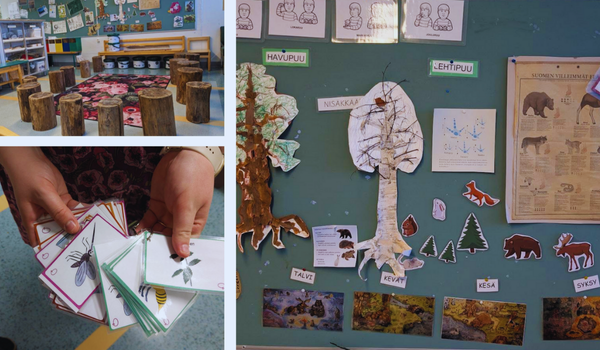
Participating in a job shadowing experience is a valuable professional development opportunity, especially within the framework of a Whole Institution Approach (WIA) to sustainability in the VET sector. WIA emphasizes systemic change, embedding sustainability not only into curricula but also into leadership, campus practices, and community engagement. By observing and interacting with institutions that have already integrated Education for Sustainable Development (ESD) holistically, educators gain practical insights that can inform their own teaching practices and institutional strategies.A compelling example comes from BSZ Chemnitz in Germany, where a teacher responsible for training kindergarten educators participated in a job shadowing experience in Tampere, Finland. During the visit, they explored how Finnish VET schools and early childhood institutions"such as Korento Nature School"embed ESD into everyday practices. These institutions model sustainability through outdoor learning, nature-based pedagogy, and strong links between ecological values and early education. The experience provided concrete examples of how sustainability can be seamlessly integrated into teacher training and early childhood education.
Such experiences are made possible and more accessible through funded programmes like Erasmus+. By covering travel, accommodation, and logistical costs, Erasmus+ lowers the barriers for educators and institutions to engage in international exchanges. Beyond financial support, the programme fosters long-term partnerships, supports innovation, and encourages the sharing of best practices across borders. In the context of a WIA, Erasmus+ strengthens institutional capacity and accelerates the integration of ESD by enabling staff to see successful models in action and bring that knowledge back to their own educational communities.
Where it’s being implemented
This link might not lead to content in English language. Use your browser's translate function or automatic captions to explore this resource.Impact and Results
- Enhance ESD competencies: Strengthen educators' knowledge, skills and attitudes related to ESD by observing and learning from leading institutions.
- Foster peer-to-peer learning: Create opportunities for mutual exchange of ideas, experiences, and best practices between visiting and host educators, strenthening professional dialogue and reflective practice.
- Promote Institutional Learning: Support the transfer of innovative, whole-institution sustainability practices from host institution to the home organization, fostering systemic change.
- Build Capacity for Internationalization: Strengthen the international dimension of educational institutions by fostering global networks, intercultural competence, and strategic cooperation in sustainability-focused education.
Implementation Tips and Insights
- How about making sustainability a key aspect of your students' mobility experiences? Actively look for green hosting companies when arranging internships.
- Have you heard of Green Erasmus? Make your travel more sustainable by choosing low-emission transportation, such as trains or buses. Erasmus+ supports eco-friendly choices by offering higher travel grants and additional allowances for green travel days.
- After returning from your mobility, share your insights and experiences with your peers. Why not adopt one of the sustainable practices you encountered to create a direct and lasting impact from your learning journey?
Useful Links and Resources
This link might not lead to content in English language. Use your browser's translate function or automatic captions to explore this resource. The Erasmus+ Programme Guide (2025) provides detailed information about various Erasmus+ activities, including job shadowing.https://erasmus-plus.ec.europa.eu/sites/default/files/2025-01/erasmus-programme-guide-v2.2025_en.pdf


- © 2023 GreenVET | handcrafted & powered with love by GreenVET Team