GreenVET pathway

Online GreenVET Path
| ← close |
 |  |  | ||
Innovative Use of Food Waste
Nearly one-third of all food is lost or wasted, making the reuse of surplus ingredients an urgent environmental and social priority. Cities like Espoo, Finland, are leading the way with innovative solutions - from growing mushrooms on coffee grounds to turning waste into energy, compost, and redistributed meals - showing how food byproducts can power circular, community-driven systems.Key People and Partners Involved
- School management and teaching staff
- Students
- Local companies or NGOs
- School canteen staff
Description of the practice
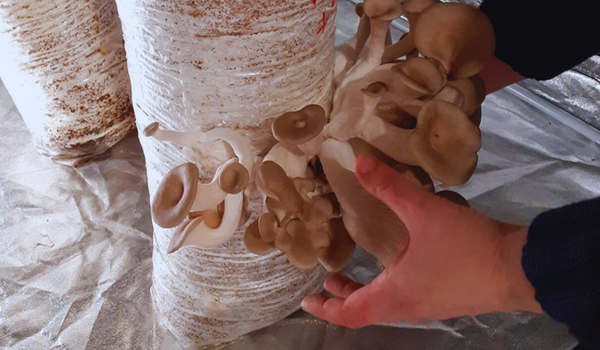
In the city of Espoo, Finland, a lively collaboration between Higher Education (Aalto University), Vocational Education and Training (Omnia), local businesses, and led by the City of Espoo, unfolds a fresh narrative for food waste. Since mid-2022, the KETO project has been piloting tangible ways to turn surplus ingredients into community wealth.One standout example: coffee grounds. At Omnia’s student restaurant, used grounds are collected in 20 liter containers, stored under cold conditions, then harvested by Helsieni (an SME specialising in mushroom cultivation). There, they become the nutrient-rich substrate for oyster mushroom production. What was once waste transforms into gourmet fungi, illustrating a truly circular model - from cafeteria to crop.
This local success story mirrors an international tide of innovation. Across the globe, food waste is roughly 30–40% of the food supply - about 1.3 billion tonnes annually - making systemic change imperative.
Where it’s being implemented
This link might not lead to content in English language. Use your browser's translate function or automatic captions to explore this resource.- Omnia, the Joint Authority of Education in the Espoo Region, and Helsieni, a company located in the Kera district, have started a cooperation project that promotes circular economy and local food production.
https://www.espoo.fi/en/articles/cooperation-project-supports-local-food-and-innovative-use-surplus-ingredients
Impact and Results
- Less food waste in the student canteens
- Enables production of local and healthy food
- Promotes circular economy and local food production
Implementation Tips and Insights
- Start by looking for local companies or organisations that you could cooperate with.
- Start small. You don't have to do everything at once.
- Share the good news! When you have started and see the results, let others know as well.
- Let students explore food waste solutions: Have students research innovative ways to reuse or upcycle food waste.
Useful Links and Resources
This link might not lead to content in English language. Use your browser's translate function or automatic captions to explore this resource. Every year millions of tonnes of coffee waste are sent to the incinerator or landfill. However, coffee grounds are a great source of nutrients. As coffee grounds are available almost in every home they make a perfect growing place for mushrooms.https://www.bioeconomy.fi/helsieni-mushrooms-from-coffee-waste/


- © 2023 GreenVET | handcrafted & powered with love by GreenVET Team