GreenVET pathway

Online GreenVET Path
| ← close |
 |  |  | ||
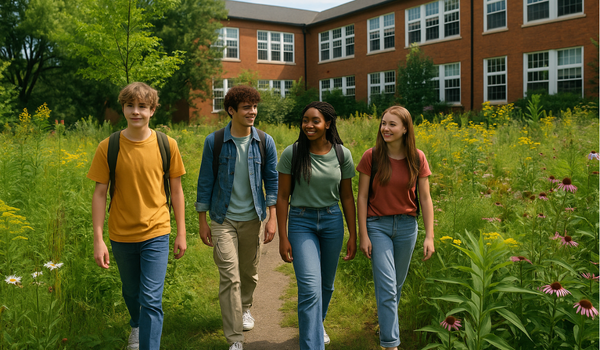
Rewildering campuses
Rewilding campuses means restoring natural ecosystems on school grounds by creating biodiverse green spaces like pocket forests, meadows, and native gardens and in-house expertise to engage the school community in design and action.Key People and Partners Involved
- Students and teachers (across disciplines)
- Facilities/groundskeeping staff
- Biology and environmental science educators
- Local ecologists, permaculture designers, or nature NGOs
Description of the practice
Rewilding campuses transforms underused or intensively managed green spaces into natural areas that restore ecological balance and support biodiversity. These spaces create opportunities for reconnecting with nature and enhance the overall environmental value of the school grounds.Participatory methods can be used to involve students, teachers, and staff in planning and imagining the rewilded space. This process fosters shared ownership, encourages creativity, and supports interdisciplinary learning through collaboration and dialogue.
Drawing on the knowledge and skills available within the school community makes the practice more accessible and sustainable. Rewilded areas can enrich education by offering hands-on learning opportunities and turning the campus into a dynamic environment for exploring sustainability in practice.
Where it’s being implemented
This link might not lead to content in English language. Use your browser's translate function or automatic captions to explore this resource.- Project Rewild offers a nationwide initiative supporting schools in identifying sections of their grounds for transformation into biodiverse "Rewilding Spaces." They provide infrastructure, training, and ongoing support to help integrate nature-based learning into everyday school life
https://www.rewildingyouth.co.uk/schools - Wilding Campuses project aims to address this by increasing the abundance and diversity of threatened species on and around our campuses. Crucially, it will also empower students, staff and young people across Nottingham to reconnect with nature and tackle the ecological crisis through practical skills sessions, and engagement and wellbeing activities.
https://www.nottingham.ac.uk/sustainability/grounds/wilding-campuses-project.aspx
Impact and Results
- Increased biodiversity and ecosystem services on school grounds
- Strengthened student connection to nature and local environment
- Enhanced cross-curricular, place-based learning
- Reduced maintenance and chemical use
- Visible commitment to climate resilience
Implementation Tips and Insights
- Start small—with a corner space, “pocket forest,” or wild border
- Choose native, drought-resistant plants adapted to your local ecosystem
- Create interpretation signage to make learning visible
- Track biodiversity changes over time with students
- Integrate the rewilded areas into classes (science, arts, geography, VET)
Useful Links and Resources
This link might not lead to content in English language. Use your browser's translate function or automatic captions to explore this resource. This episode of the Green Urbanist podcast is a conversation about the 'Wilding Campuses' programme, led by Students Organising for Sustainability (SOS-UK). The host and guests talk about the practicalities of applying a 'wilding' approach on highly altered and designed landscapes on educational campuses.https://greenurbanistpod.com/episode/117-wild-wilding-campuses


- © 2023 GreenVET | handcrafted & powered with love by GreenVET Team