GreenVET pathway

Online GreenVET Path
| ← close |
 |  |  | ||
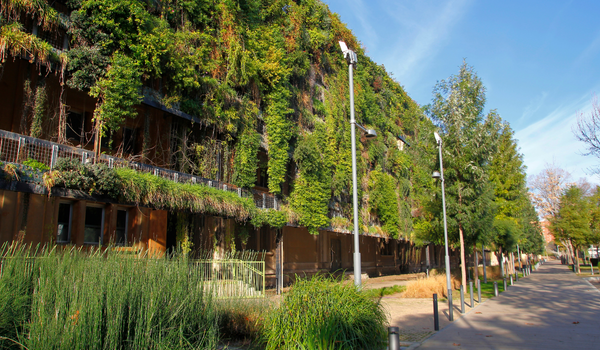
Green Walls on School Campus
Green walls (living/vertical gardens on exterior or interior walls) serve as both environmental infrastructure and pedagogical tool in vocational education and training (VET) schools. They integrate greenery into the built environment, providing ecological benefits while involving students and staff in hands-on sustainability.Key People and Partners Involved
- School management
- Facilities/groundskeeping staff
- Teachers
- Students
Description of the practice
Green walls, or vertical gardens, are walls covered with living plants—either inside or outside buildings. Besides making school spaces greener and more inviting, they help reduce energy use by keeping buildings cooler in summer and warmer in winter. In vocational schools, they’re a great way to combine sustainability with hands-on learning.This kind of project fits perfectly with the whole school approach to sustainability, where every part of the school—from lessons to building design—supports environmental responsibility. Students can get involved in designing, building, and taking care of the wall as part of classes like horticulture, plumbing, carpentry, or environmental science. It’s a practical way to learn useful skills while doing something good for the environment.
On top of learning benefits, green walls also improve the school’s environment—literally. They clean the air, help manage temperature, support local wildlife, and make school a nicer place to be. They also show the whole community that the school takes sustainability seriously and is taking real steps to act on it.
Where it’s being implemented
This link might not lead to content in English language. Use your browser's translate function or automatic captions to explore this resource.- Exterior green wall systems studied at the South Valley Campus of AASTMT in Egypt show big reductions in energy consumption, improved micro‐climate, enhanced air quality, and greater green area per footprint.
https://www.sciencedirect.com/science/article/pii/S2214509521003235"utm_ - Several schools in Austria built mobile or permanent green façades, partitions, climbing plants, etc., via workshops; used in handicraft classes.
https://pmc.ncbi.nlm.nih.gov/articles/PMC9860625/"utm_
Impact and Results
- Energy savings: reductions in heating/cooling demand via insulation or shading.
- Enhanced air quality (dust capture, CO₂ reduction) and improved microclimate outdoors or indoors.
- Increased student engagement, skill development (design, caring, plant science) and awareness of sustainability.
- Green walls help increase biodiversity by creating small habitats for insects, birds, and other local wildlife on school grounds.
- Better classroom environment evaluations / more positive perceptions of learning space.
Implementation Tips and Insights
- Start small - Try a small wall or even a few planters first to test what works best.
- Make it part of lessons - Use the project in classes like gardening, construction, or science so students can learn while doing.
- Pick the right plants - Choose plants that grow well in your local weather and don"t need too much care.
- Plan for upkeep - Make sure someone is in charge of watering, trimming, and keeping the wall healthy.
- Get others involved - Talk to school leaders, local groups, or even parents for support and ideas.
Useful Links and Resources
This link might not lead to content in English language. Use your browser's translate function or automatic captions to explore this resource. Studies in Germany/other European countries examining "green facades" (which are similar in effect) as topics in environmental/sustainability education, showing improved student knowledge, attitudes, etc.https://www.mdpi.com/2071-1050/17/6/2609"utm_
The article Implementing Green Walls in Schools (McCullough et al., Frontiers in Psychology) - describes projects, curriculum integration, lessons learned.
https://pmc.ncbi.nlm.nih.gov/articles/PMC5997894/"utm_


- © 2023 GreenVET | handcrafted & powered with love by GreenVET Team