GreenVET pathway

Online GreenVET Path
| ← close |
 |  |  | ||
Inter-School Sustainability Challenge
A friendly competition between schools aimed at encouraging students, staff, and communities to adopt sustainable practices. Points are awarded based on actions taken, community involvement, and measurable environmental impact over a set timeframe.Key People and Partners Involved
- School administration
- Students and teachers
- Participating schools
- Local municipalities
Description of the practice
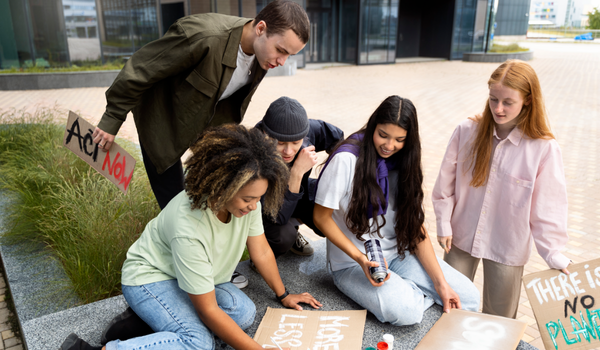
The Inter-School Sustainability Challenge is designed to foster environmental awareness and action among students by turning sustainability into a collaborative and competitive effort. Schools agree on a timeframe and a set of sustainability goals, such as reducing waste, saving energy, promoting eco-friendly transportation, or organizing community clean-ups. Each school forms a sustainability team to lead the initiative and track progress.Throughout the challenge, schools earn points for implementing sustainable actions, engaging the local community, and demonstrating measurable impact. Activities might include installing recycling stations, hosting awareness campaigns, planting trees, reducing single-use plastics, or organizing collection drives for waste paper, used batteries, and aluminum cans. Regular updates and friendly rivalry help maintain momentum and enthusiasm among participants.
At the end of the challenge, results are shared and celebrated. The winning school may receive a symbolic prize or recognition, but all participants benefit from the positive environmental changes and strengthened community ties. The challenge encourages long-term thinking and often leads to permanent improvements in school policies and student behavior.
Where it’s being implemented
This link might not lead to content in English language. Use your browser's translate function or automatic captions to explore this resource.- Podari pločevinko" (Donate a Can) is an eco-humanitarian initiative that included an inter-school competition to collect the highest number of aluminum cans. In one edition of the campaign, students from eight regions collected over two tons of cans, demonstrating the power of collective environmental action. The winning school stated that their collection system had become so well-established that they planned to continue collecting cans even after the competition ended.
https://arhiv.gorenjskiglas.si/article/20110623/C/306239973/podari-plocevinko - The Earth Prize is a global environmental sustainability competition for students aged 13 to 19, encouraging them to develop innovative solutions to real-world environmental challenges. Participating schools from over 150 countries compete by submitting student-led projects, with the most impactful ideas receiving funding and international recognition.
https://www.theearthprize.org/schools - Race to Zero Waste is a campus-based sustainability competition held across colleges and universities in the United States and Canada, focusing on waste reduction and responsible resource management. Institutions compete in categories such as waste minimization, food waste reduction, and recycling, with results tracked and shared to encourage continuous improvement.
https://campusracetozerowaste.org/participate/categories/race-zero-waste/
Impact and Results
- Increased student engagement in sustainability efforts
- Reduction in school waste and energy consumption
- Strengthened collaboration between schools and local communities
- Greater awareness of environmental issues among students and staff
- Implementation of lasting eco-friendly practices
Implementation Tips and Insights
- Set clear and achievable goals for the challenge.
- Encourage student leadership and creativity.
- Use social media or school websites to share progress and inspire others.
- Involve parents and local organizations for broader impact.
- Celebrate all contributions, not just the winning school.
Useful Links and Resources
This link might not lead to content in English language. Use your browser's translate function or automatic captions to explore this resource. This guide from Eco-Cycle outlines a “Waste-Free Lunch School Contest,” a practical initiative encouraging schools to reduce lunch-related waste through student engagement and friendly competition. Although created for the U.S. context, many of its strategies and tools can be easily adapted for schools in EU. From: https://ecocycle.org/our-programs/boulder-county-model/zero-waste-programs/schools-programs/schools-guide/https://ecocycle.org/content/uploads/2022/06/2.2_Waste-Free-Lunch-2-School-Contest-Chapter-2.pdf


- © 2023 GreenVET | handcrafted & powered with love by GreenVET Team