GreenVET pathway

Online GreenVET Path
| ← close |
 |  | |||
Usage of Open Education Resources (OERs)
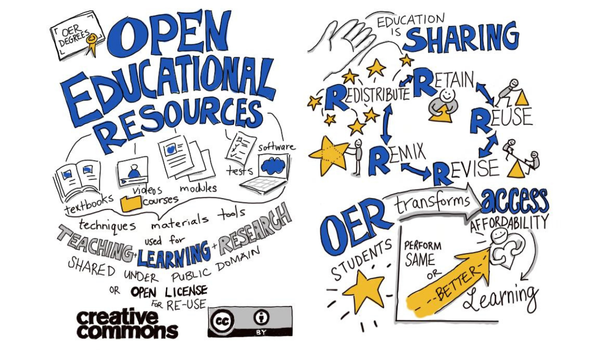
A vast range of learning materials is available online, and digital technologies make sharing easier than ever. Yet, most educational resources remain under restrictive copyright, limiting legal sharing and reuse. Open licensing reverses this by clearly stating how materials can be used and adapted, promoting openness and collaboration. This shift enables OER-driven teaching. In Vocational Education and Training (VET), the potential of Open Educational Resources (OER) and practices remains underused. Openly licensed, high-quality content - such as textbooks, syllabi, presentations, videos, and more - could significantly expand access to quality VET.Key People and Partners Involved
- School management and teaching staff
- Students
Description of the practice
Open Educational Resources (OER) are teaching, learning, and research materials that are either in the public domain or openly licensed, allowing anyone to freely access, use, adapt, and share them. Unlike traditional copyrighted content, which limits use and modification, OER come in various formats, including textbooks, course materials, videos, and software.Open Educational Resources (OER) support sustainable development by enabling the teaching of green skills, such as resource management and circular economy principles, across vocational fields. They enhance accessibility by reducing costs, making quality education more attainable, especially in developing countries.
OER also foster innovation, allowing educators to adapt materials to local needs and integrate sustainability best practices. Additionally, they promote lifelong learning by providing continuous upskilling opportunities throughout workers’ careers.
Where it’s being implemented
This link might not lead to content in English language. Use your browser's translate function or automatic captions to explore this resource.- This page offers training materials to build capacity for teaching sustainability in VET, with a focus on Sustainability, Circular Economy, and Lean. It includes teacher resources, student-facing Sway presentations, and 12 learning activities. Materials are available in English, Finnish, Swedish, Danish, German, and Portuguese.
Students can also explore four interactive 360° environments - Home & Healthcare, Hospitality, Construction, and Manufacturing - on any device. A teacher’s guide and a blog featuring sector-specific insights from various countries are also provided.
https://www.train2sustain.eu/ - GreenVET Database is a collection of resources contributed by GreenVET Pathway project partners, our community of practice, but also by YOU. The collection contains links to resources that will inspire the green transformation of your VET-school's values, actions, and teachings.
https://www.green-vet.eu/content/database.php - The site/list features platforms and services with OER and other freely available resources for VET.
https://unevoc.unesco.org//home/OER+for+TVET
Impact and Results
- Easier access to high-quality VET materials without cost barriers
- Working together: easy sharing and improving materials as a team
- Saving time and effort: building on what's already out there for saving time, money, and energy
- Support for teachers through open licensing of work development content
Implementation Tips and Insights
- Find suitable OER: Locate resources that match the sustainability skills needed in your field.
- Adapt for context: Customize or create OER to fit local needs and learners.
- Share and collaborate: Distribute your adapted OER and engage with fellow educators.
- Foster open practices: Involve students in using, creating, and contributing to open learning resources.


- © 2023 GreenVET | handcrafted & powered with love by GreenVET Team