GreenVET pathway

Online GreenVET Path
| ← close |
 |  |  | ||
Outdoor Classroom
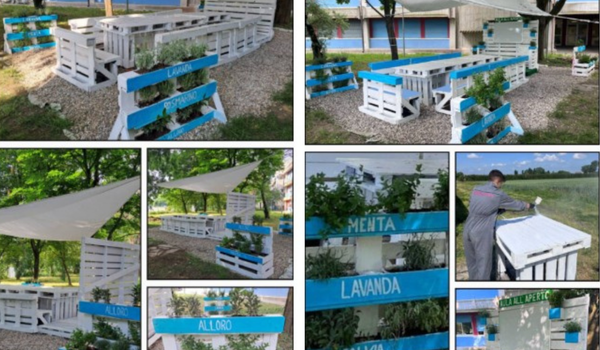
Students design and build an outdoor classroom, integrating nature into the learning environment.Key People and Partners Involved
- School management
- Students
- Teachers
- Local community
Description of the practice
Often, we associate outdoor learning with younger students, but for adult and teenage learners, the benefits are just as powerful. Creating an outdoor classroom offers an opportunity to step outside traditional learning spaces and connect with nature in a meaningful way. This connection fosters a sense of responsibility and sustainability, helping students see the world around them in a new light and encouraging a deeper appreciation for environmental issues.The outdoor classroom isn"t just a space to escape the walls"it"s an active, hands-on learning environment that enhances engagement. By incorporating natural seating, open-air discussion areas, and functional outdoor materials, students can experience learning in a flexible, dynamic setting. Whether it's a science lesson in the garden or a team-building exercise, this space encourages creativity, critical thinking, and practical skill-building, making learning more tangible.
For adult and teenage learners, time spent in an outdoor setting also offers mental and emotional benefits. Nature has been shown to reduce stress, improve focus, and boost overall well-being, which can enhance both learning and personal growth. In a vocational or technical education setting, this kind of immersive experience promotes not only academic growth but also lifelong skills that students can carry with them into the workforce.
Where it’s being implemented
This link might not lead to content in English language. Use your browser's translate function or automatic captions to explore this resource.- Implemented at ITS "Ignazio Calvi", the outdoor classroom serves as a model for integrating nature into education.
https://www.its-calvi.edu.it/pagine/progetto-aula-allaperto - At the Alice-Salomon Vocational College, students and teachers collaborated to design a furniture series for the Green Classroom. The focus of the project was on students manufacturing the furniture using available production facilities and repurposed materials. For example, seating furniture was made from old wooden slats that were previously part of wall paneling in the school center. Additionally, the website provides detailed construction instructions for stools and podiums, allowing others to replicate or adapt the project.
https://formagora.de/projekt-gruenes-klassenzimmer.php
Impact and Results
- Enhanced Practical Skills: Students apply hands-on skills in construction and design.
- Improved Engagement: The outdoor setting boosts student motivation and participation.
- Stronger Connection to Nature: Students develop a deeper environmental awareness.
- Boosted Wellbeing: Time outdoors reduces stress and improves focus.
- Increased Collaboration: Students strengthen teamwork through shared projects.
Implementation Tips and Insights
- Involve students in the planning and construction phases.
- Ensure the space is adaptable to different teaching methods.
- Incorporate sustainable materials in the construction, e.g. reused material.
- Regularly maintain the outdoor classroom to ensure its usability.


- © 2023 GreenVET | handcrafted & powered with love by GreenVET Team