GreenVET News

GreenVET - News
| ← back |
News
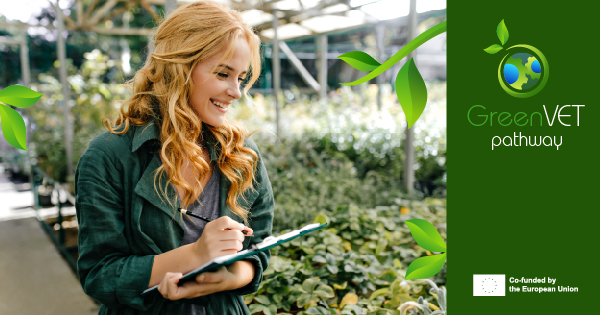
Empowering Teachers for the Green Transition
As the new school year settles into rhythm, the focus of sustainability in VET moves beyond planning and implementation to one of the most crucial pillars of long-term impact: empowering teachers. Educators play a central role in shaping how sustainability is understood, practiced, and ultimately embedded within vocational education and training. While green skills and environmental awareness are increasingly recognised as essential in today’s workforce, their integration into classrooms begins with confident, knowledgeable, and inspired teachers.
VET educators are uniquely positioned to translate sustainability concepts into real-world applications. Whether teaching hospitality, construction, technology, or tourism, they are the bridge between policy and practice. Yet, many teachers face challenges — limited time, lack of training opportunities, or uncertainty about how to apply sustainability principles within their subject areas. Empowering them with flexible learning options, resources, and peer networks is therefore vital. Asynchronous online training, for instance, allows teachers to upskill at their own pace, exploring modules on topics such as energy efficiency, green entrepreneurship, and circular economy. Such programmes are emerging across Europe, reflecting a growing recognition that sustainability must be built into professional development, not treated as an optional extra.
The GreenVET Pathway project supports this transformation through the Whole Institution Approach, which calls for every level of a school — from governance to teaching and community engagement — to align with sustainable principles. Within this framework, teacher empowerment is not only about skill-building but also about ownership and inspiration. When teachers are equipped and motivated, sustainability moves from being a theoretical concept to an active force that shapes how lessons are taught, how facilities are used, and how students engage with their communities.
Empowering educators has ripple effects far beyond the classroom. Teachers who integrate sustainability into their practice model responsibility, creativity, and critical thinking for their students. They help foster a mindset where environmental and social awareness become second nature. In turn, learners carry these values into their future workplaces and communities, multiplying the project’s impact.
The green transition depends not only on new technologies and policies but on people — and teachers are among its most influential agents of change. By supporting and investing in them, we ensure that sustainability in VET is not just a goal but a lived, evolving practice that prepares both educators and students for a greener, more resilient future.
Get in touch
For more information about the project, please contact us at contact@green-vet.eu


- © 2023 GreenVET | handcrafted & powered with love by GreenVET Team